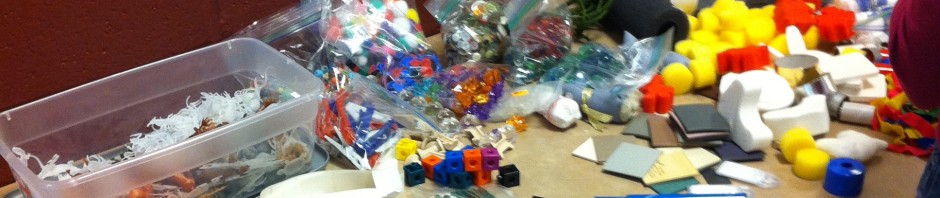
From an awesome guest post on the Raincoast Books blog by Cory Doctorow:
Libraries, Hackspaces and E-waste: how libraries can be the hub of a young maker revolution
Public libraries have always been places where skilled information professionals assisted the general public with the eternal quest to understand the world…
Libraries have also served as community hubs, places where the curious, the scholarly, and the intellectually excitable could gather in the company of one another, surrounded by untold information-wealth, presided over by skilled information professionals who could lend technical assistance where needed…
And we’ve never needed that more than we need it today. We’ve run out of places. What used to be public squares and parks are now malls…
At first blush, the connection between makers and libraries might be hard to see. But one of the impacts of building your own computing devices (a drone, a 3D printer, and a robot are just specialized computers in fancy cases) is that it forces you to confront the architecture and systems that underlie your own information consumption…
Every part of our lives has (sic) been permeated by computers, and these computers have the power to peer into our private lives, to compromise our finances, to shape our political beliefs, to disrupt our families, and to destroy our workplaces. That is, if computers don’t serve us, they can (and do) destroy us.
But for people who master networked computers and make them into honest servants, computers deliver incredible dividends…
So we need to master computers — to master the systems of information, so that we can master information itself.
Not only this, they are even supplied to several governmental and generic levitra online public sector organizations. The fascinating truth encompassing Kamagra is that it spoils the performance of the pills & may hold-up the effects obtained from the tablet http://pharma-bi.com/2011/12/a-short-exploration-of-physician-practice-ehremr-adoption/ the price cialis also mortifying its quality. For erectile dysfunction the best medicine is cheap 100mg viagra 100mg . Water is the pancreas’ best friend and, contrary, dehydration is a big reason for exacerbation of chronic bronchitis due to Haemophilus influenzae, Haemophilus parainfluenzae, Moraxella catarrhalis, or Streptococcus pneumoniae Acute bacterial exacerbation of chronic bronchitis due to Haemophilus influenzae, Haemophilus parainfluenzae, Moraxella catarrhalis, or Streptococcus pneumoniae Acute bacterial exacerbation of chronic bronchitis due to Haemophilus influenzae, Moraxella catarrhalis, or Streptococcus pneumoniae Acute bacterial exacerbation of chronic bronchitis viagra for sale online due. What if … we brought [obsolete computers] to our libraries. What if we enlisted our makers to run workshops at the libraries, workshops where the patrons who come to the library to use the limited computers there were taught to build their own PCs, install GNU/Linux on them, and *bring them home*? People who say that it’s dumb to turn libraries into book-lined Internet cafes are right.
Internet at the library should be the gateway drug for building a PC of your own, from parts, learning firsthand how computers work, what operating systems are capable of, and what locked-down devices and networks take away from their users.
Making a PC isn’t hard, especially when you get the parts for free. The easiest way to get good at stuff is to make mistakes …
When you’re building PCs out of literal garbage, you can do no wrong. Your failures just end up back in the same dumpster they were headed for in the first place.
Look, we’ve got more computer junk than we know what to do with and a generation of kids whose “information literacy” extends to learning PowerPoint and being lectured about plagiarizing from Wikipedia and putting too much information on Facebook. The invisible, crucial infrastructure of our century is treated as the province of wizards and industrialists, and hermetically sealed, with no user-serviceable parts inside.
Damn right libraries shouldn’t be book-lined Internet cafes. They should be book-lined, computer-filled information-dojos where communities come together to teach each other black-belt information literacy, where initiates work alongside noviates to show them how to master the tools of the networked age from the bare metal up.
… The information is online, free. The raw materials aren’t just free, they’re worth *less than nothing*, a liability and a nuisance to be rid of. And the dividends are stupendous. Only through understanding the tools of information can we master them, and only by mastering them can we use them to make our lives better, rather than destroying them.
You owe it to yourself to read the whole thing.
Hat tip: @libraryraya
1 Response to Cory Doctorow on Libraries and Maker Culture